Dostcast · role 6 · process improver

1. Clippers2. Channel growth (YouTube)3. Head of outreach (hospitality background ideally)4. Community manager5. Graphic designer and copywriter (a person who can do both)6. Process improver (most critical to streamline processes and remove friction)7. High-end short form editors who understand taste

For Vinamre · role 6 of 7

Every new hire will bring their own AI. Somebody has to make them one team.

You called role 6 the most critical one: streamline the processes, remove the friction. Hiring six more people makes it more true. Each new person will turn up with their own AI and their own tricks, and each will get faster alone. But when one of them works out why a clip landed, the rest of the team usually never hears about it. It stays in a chat, or in one head. I don't think the answer is one more smart person. It's a system: shared context, a team brain and boring automations that keep working when people are busy, away or new. That's what I build. I build systems, and I'm not an editor.

1.3Msubscribers
1.1/wkepisodes, 87 min median
3.4/wkShorts across the last 120
12 dayssince the 30 Oct episode, no clips yet (usual: 1–6)
The thesis

AI has solved one person's work. It hasn't solved the team's.

Anyone on your team can open Claude or ChatGPT today and get faster. What nobody has solved is the sharing. The research done before the guest was booked. The moment someone noticed on shoot day. The hook the editor found on the third try. The line the copywriter tested. Each of those usually helps one person, once. A quick fix helps for a week. A system keeps helping when the person who knew is busy, away, or has left. As I see it, the process improver's job is to make one person's lesson everybody's default. That takes four things, and the rest of this page shows them against your public uploads.

shared context+ team brainClippersChannel growthOutreachCommunityDesign + copyShort-form editorsHost

01Shared context

One file per episode, started when the guest is booked and added to by every role: the guest brief, shoot-day notes, the transcript and chapters, moments marked for clips, sponsor reads, thumbnail and title options, what has gone up where. Nobody asks "where's the file?" and nobody explains the episode twice.

02Team brain

The team's own rules, written once and read by everybody's AI: how we pick a clip, how we title, what to check before anything goes up. Plus the "what worked" log. When one person gets better, they update the rule, and everyone's next draft starts from there. A new hire gets it on day one.

03Automations

The boring steps that are the same every time run by rule: ingest, transcript, chapters, the description footer, file names, the pre-publish checklist, the nudge when a step is late. Where a fixed rule does the job, it gets a rule, not an AI.

04AI as augmentation

Each person keeps their own AI. It finds, suggests, checks and flags. People decide. Nothing posts by itself. The creative work stays with the creative people: the writers write, the editors cut.

The thesis, against your public uploads

Your clip line kept time through September. It hasn't restarted with the episodes.

All numbers here were read on 11 Nov 2026 from public YouTube data: the 39 episodes listed on your Videos tab, your last 120 Shorts and last 45 uploads on Dostcast Clips. I can't see inside the team. So I'm not offering fixes. Each card names the part of the system that would have caught it, and what I'd ask you first.

EpisodesClipsShortsno clips since 8 Oct5 Sep1 Oct1 Nov11 Nov

From 5 Sep to 11 Nov 2026. Top row: episodes. Middle row: uploads on Dostcast Clips. Bottom row: Shorts. You were away for part of this, by your own account on 18 Oct. The clips on 9–10 Sep came from an episode that is now private, so it has no dot.

Dostcast Clips: nothing yet from the Varun Mayya episode

From mid-September, each guest episode got 7–12 clips on Dostcast Clips within 1–6 days of release. That line works. The last upload was on 8 Oct. Then you were away, as you said in the 18 Oct episode, and there was nothing new to clip. Episodes are back now. The 30 Oct one is 12 days old with no clips there. The 6 Nov one is still inside your usual window.

Shared context and automations. The episode file opens the clip task the moment an episode is locked, with an owner and a due date, and nudges when it's late. The line then restarts by itself after a break, with nobody having to remember it.

You're hiring clippers, so you may already know why. Is the Clips channel meant to restart with the episodes, and who starts it?

Shorts haven't picked back up yet either

21 Shorts in September and 10 in October, 4 of them after 10 October. Part of that is the break: there was no guest episode between 2 and 30 October. Since then there have been two Shorts on 31 Oct and none so far in November, with a new episode up on 6 Nov.

Automations. One count per episode, from release day, that everyone can see. The system notices a slip before a person has to.

Who picks the moments that become Shorts, and how do they find out an episode is ready?

The line, restarted

Your 30 Oct episode has nothing on Dostcast Clips yet. So I ran it.

8 of the 20 clips my pipeline cut from the Varun Mayya episode. Two Shorts that look cut from it went up on your main channel on 31 Oct, and one of my picks (the freelancing one) probably overlaps yours. Dostcast Clips has none. Each clip carries a series and a risk level: green, orange (check before posting) or red (hold). The red one is shown as a still with its reason. The titles are the speakers' own words, cut short. Your editors would pick better moments. The point is the system: one episode in, a ranked, labelled, checked set out, the same way every time.

I cut these without asking, so you could see the line running on your own episode. They exist only on this unlisted page, which only people with the link can open. Nothing gets posted anywhere without your yes, and if you'd rather they didn't exist, tell me and I'll delete them. Tap a clip for sound. Clips marked red are shown as stills.

600 people, everyone forgetsgreen · How Varun runs it · 29 s
make faster speedboatsgreen · Ship captain · 49 s
storytelling runs the worldgreen · Storytelling runs the world · 78 s
10 times more importantgreen · Storytelling runs the world · 47 s
run experimentsgreen · How Varun runs it · 51 s
what entrepreneurship truly isgreen · Ship captain · 76 s
reverse Robin Hoodgreen · How Varun runs it · 67 s
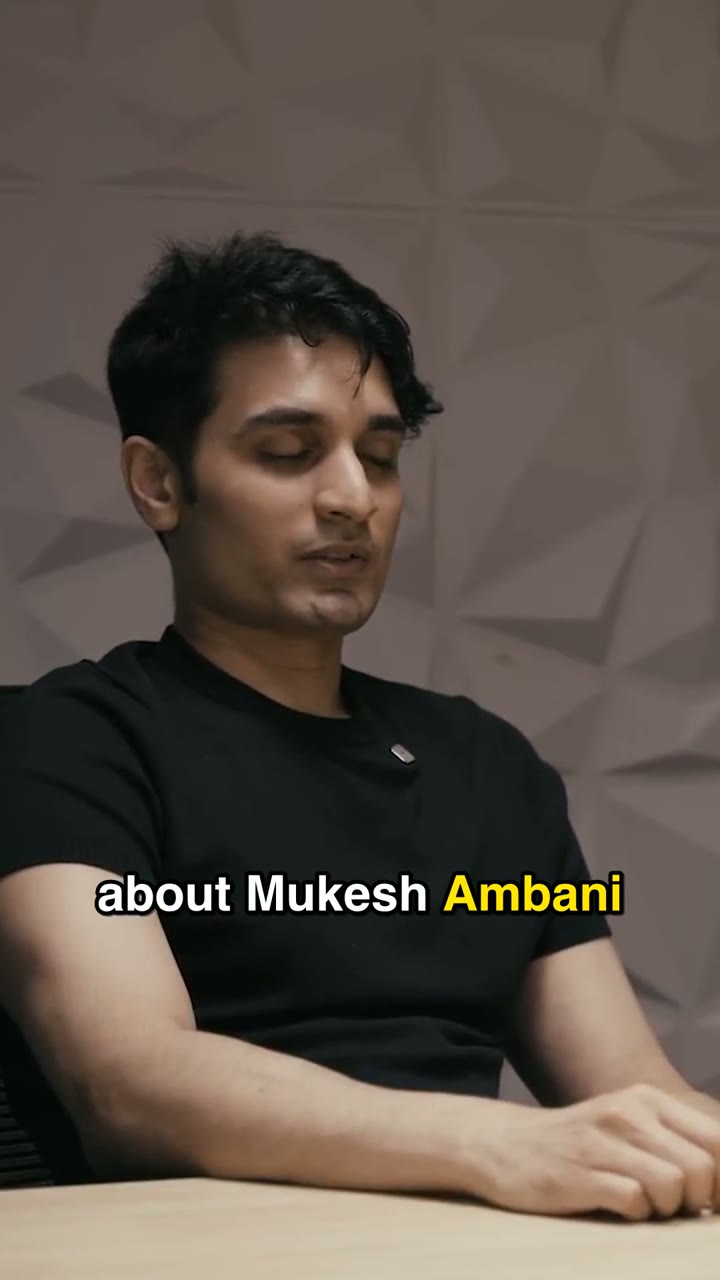
held back: second-hand anecdote about a named businessmanMukesh Ambani says itred · Mind viruses · 31 s · held back: second-hand anecdote about a named businessman
What I can see from outside, continued

One Short did 5.5M views. The typical one does about 17K.

Your biggest Short and October's second biggest, beside three typical ones

Bars are views, to scale. Same channel. The top one did more than 300 times the typical one. From outside I can't tell why. In most teams that reason sits in one editor's head, and it leaves when they do.

5,549,395
CRAZY Japanese Hotels 🤯 | Dostcast
652,224
They Purposely Destroyed Kolkata 🤯 | Dostcast
17,387
Mumbai = Best City? 😍 | Dostcast
17,297
India vs China: Air Force Comparison 🤯 | Dostcast
17,169
Supplements are FAKE 🤯 | Dostcast

When a Short goes big, is the reason written down anywhere?

Your median Short has 17,233 views. The top 12 of 120 hold 78% of all the views, and one Short ("CRAZY Japanese Hotels 🤯 | Dostcast") holds 38% by itself.

Team brain. Every hit gets a "what worked" entry from the person who made it: the hook, the length, the topic and their best guess at why. Every editor's AI reads it before the next pick.

When a Short takes off, what happens the next morning, and who hears about it?

A viewer who likes a Short has no path to the episode

9 of 120 Short titles name the guest, and 0 of 120 descriptions link the episode. The descriptions link the Clips channel, Spotify and WhatsApp instead. Your Clips uploads do link the full episode; the Shorts don't. (I didn't check YouTube's related-video link on Shorts, which doesn't show in the description.)

Automations. The pre-publish check adds the guest's name and the episode link. It's a rule, so it doesn't depend on someone remembering.

Is sending Shorts viewers to the full episode a goal, or something you've decided against?

Some of this is already a process. Keep it.

39 of 39 episode descriptions carry the same footer, and 35 of 39 have chapters.

Team brain. Written down as rules, these habits reach new hires on day one instead of being learned by copying old uploads.

Which of these are still done by hand, and by whom?

What I've built

Two pieces work today. Two are part plan. Each row says which.

Episode-to-clips pipelineFixed steps from a long episode to finished vertical clips: transcript, picks with a risk label and a reason, crop, captions, render, checks. It made the clips shown above. A person approves the picks before anything goes out.built, used on real episodes
Checks before anything shipsLoudness is normalised, and automatic checks cover file size, framing and risk. A clip marked red goes on a page only as a still with its reason.built
Team board and connectorOne board the whole team works on, with each person's own Claude connected to it (ChatGPT and Grok are next). The assistants get a short, fixed list of tools. They can propose and they cannot post. Roles decide who can do what, and a save from an out-of-date copy is refused.built and tested locally; hosted version not deployed
Taste loopEvery approve and reject is logged. The idea is that the picking learns what this team likes over time. Today it only records. It does not learn yet.logging built; the learning is a plan
The first 30 days

Listen first. Fix one hand-off. Then share what worked.

Week 1: listen

Sit with each role. Follow one episode from guest booking to the last Short and write down every hand-off: who passes what to whom, where, and how long it waits. No tools yet.

Week 2: measure

Agree three numbers with you: days from episode to first clip, clips and Shorts per episode, and rework (things done twice). Put them where the whole team sees them.

Week 3: one fix

Fix the hand-off that costs the most. From outside, my guess is episode to clippers, but week 1 decides. Write the step down, give it an owner, automate the boring half. The test is simple: nobody should need to send a "bhai, clips ka kya hua?" message.

Week 4: team brain v1

Start the shared episode file on one live episode. Write the first three team rules with the people who do the work. Connect each person's own AI to both. Then check what got used and drop what didn't.

What I'd ask in week 1

  • Where does an episode live today: Drive, Notion, a WhatsApp group, somebody's head?
  • Which step do you personally chase most often?
  • Do the clippers and the Shorts editors work from the same picks, or does each start from the full episode?
  • When someone leaves, what leaves with them?
  • Which tools and AI subscriptions does the team already pay for?
What I left out, on purpose

This isn't an editing pitch

If this is the role, I'd start by listening.

Week 1 needs time with each role and nothing else. If you'd like to see more before that, pick an episode and I'll run it the same way, and draft its shared episode file by hand, so you can judge the system on your own work and not on my word.

Chinmay
Numbers read from public YouTube metadata on 11 Nov 2026; view counts change daily. A private, unlisted page made for this application.